

After so many years of celebrating Tết, it wasn’t until this year that a question from a university professor in Canada left me frozen, and it wasn’t because of the Winnipeg cold. “What is the difference between Vietnamese Tet and Chinese New Year?”
That question sent me on a journey, tirelessly searching through Google, YouTube, and Wikipedia, etc. to gather these vital historical insights. I did this not just for myself, but to keep the flame of Vietnamese culture alive and to join my fellow 'Children of the Dragon and Grandchildren of the Immortal' in amplifying our voice to the world. We want friends from all continents to know that if they ever seek a cultural pilgrimage to Southeast Asia, they must come and experience the soul of the Vietnamese Tết.
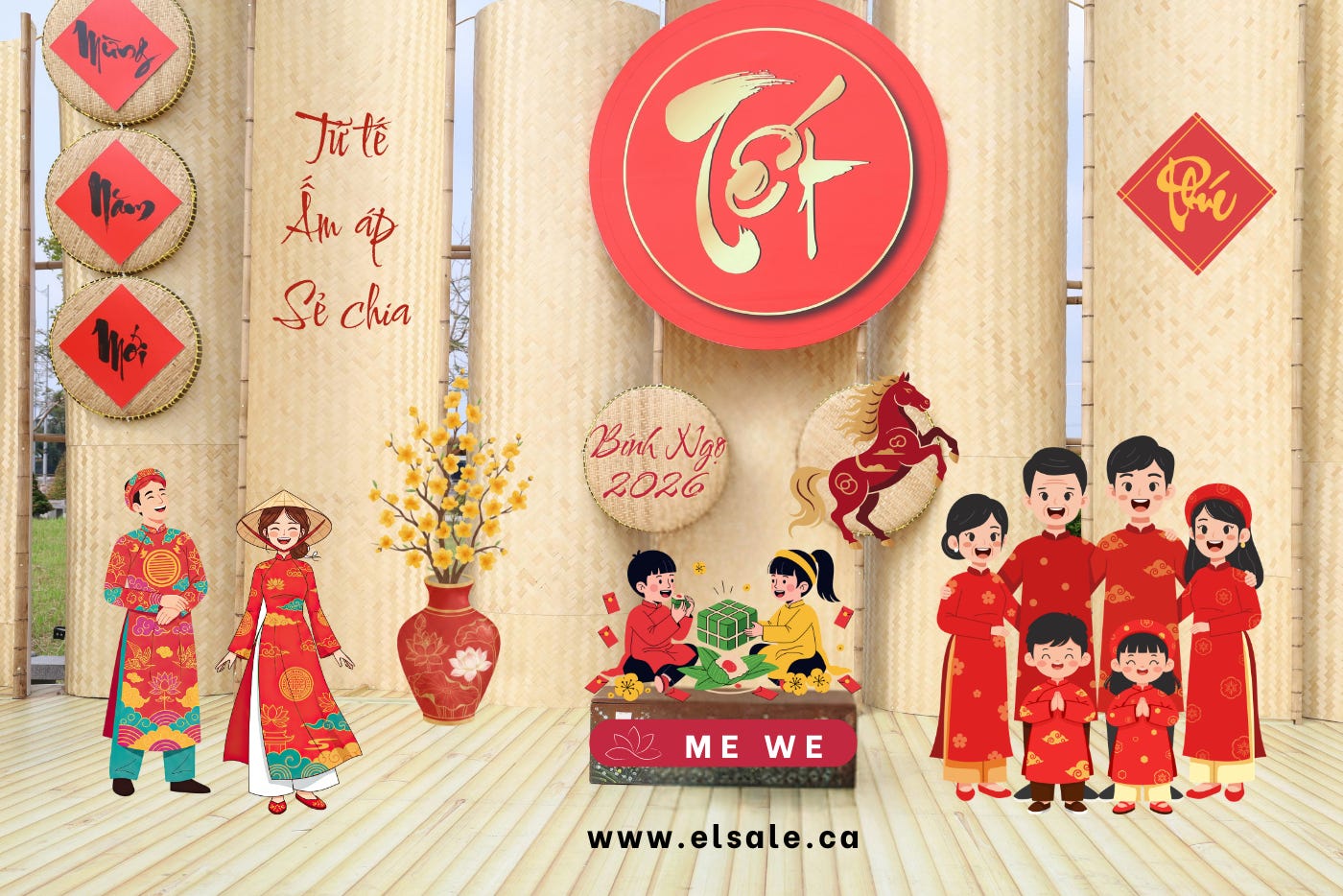
Tết Nguyên Đán, or simply Tết, is the most sacred and significant festival in the hearts of the Vietnamese people. It is more than just a transition between the old and the new year; it is the quintessence of gratitude, filial piety, and the eternal hope for prosperity. While sharing some similarities with other Asian cultures, Vietnamese Tet carries a distinct soul deeply rooted in the wet rice civilization, a heritage that remains unique to the land of the Red River and the Mekong River.
1. Origins: A Legacy of the Wet Rice Civilization
A common misconception suggests that Tet originated from China. However, historical evidence and ancient texts tell a different story. According to the Classic of History (Shujing), Confucius himself noted that he was unfamiliar with "Tet," describing it as a grand festival of the "Man" people (the ancient Yue people in the South) where they gathered to dance, drink, and celebrate after their harvest.
2. The Sacred Convergence of Heaven and Earth
The Lunar New Year is calculated according to the lunar calendar, usually falling between late January and mid-February of the solar calendar. This is the time when the biting cold of winter gradually fades, light spring drizzles begin to fall, and the buds of life start to sprout and flourish.
This period signifies a new beginning. Everything from deep-cleaning the house and settling debts to setting aside the sorrows of the past year, is done to welcome good fortune. For the Vietnamese, Tet begins on the 23rd day of the 12th lunar month (The Kitchen Gods' Day) and lasts through the 3rd day of the New Year, often extending until the Full Moon of the first lunar month (Rằm tháng Giêng).
3. Significance: Reunion and Gratitude
For every Vietnamese person, Tết is the season of Reunion. No matter how far one wanders, the “call of Tet” brings everyone back to the ancestral hearth. It is the invisible thread that binds generations together.
Tết is also a time for Gratitude and Filial Piety. It is the embodiment of the proverb “Uống nước nhớ nguồn” (When drinking water, remember the source). Families offer incense to their ancestors, inviting the spirits of the deceased to join the living for the festive feast. Beyond family, it is a moment of harmony between humans and nature, as people pray for the gods’ protection and a peaceful, prosperous year for the whole village.
4. Tết Traditional Customs: The Cultural Soul of Vietnam
The customs of the Vietnamese Tết are rich and sophisticated, with every gesture carrying a message passed down from our ancestors to generations for eternity:
The Kitchen Gods - Dec 23rd (Đưa Táo về trời): The opening ritual where families send the hearth spirits to heaven to report on the year’s events.
Wrapping Bánh chưng and Bánh tét: The most iconic tradition. A family gathering around a boiling pot of cakes through the night is the warmest image of Vietnamese Tet.
First Footing (Xong Dat) & New Year Greetings: The belief that the first person to enter a home after New Year’s Eve determines the family’s luck.
Elders give lucky money in red envelopes (lì xì) to children, symbolizing wishes for health and success.
Spring Excursions & Temple Visits: People visit pagodas to pray for peace and to enjoy the blossoming beauty of spring.
5. Tết Cuisine: The Essence of Earth and Sky, The Harmony of Nature
The Tết feast is a balance of “Yin and Yang” and the five elements.
Spanning the length of the S-shaped land, the three regions of Vietnam boast three distinct culinary identities:
The Vietnamese Tết feast is a harmony of Yin and Yang and the Five Elements. Spanning the S-shaped land, the three regions offer three distinct culinary identities:
The North: Painted with vibrant colors from green Bánh chưng, red Gấc sticky rice, jellied meat (Thịt đông), and elegant dried pigskin soup (Canh bóng).
The Central: Awakens the palate with Bánh tét, pickled vegetables (Dưa món), fermented pork rolls (Nem Chua), and rich, savory meat marinated in fish sauce.
The South: Reflects abundance with Bánh tét (filled with banana or meat), a pot of braised pork and eggs in coconut water, and a bowl of bitter melon soup (symbolizing the hope that past hardships - Khổ will pass away - Qua).
All of these dishes are prepared from the bounties of the homeland, showcasing the skillful craftsmanship of Vietnamese women and the filial piety of younger generations offered to their ancestors.
Vietnamese Traditional Tết is a symphony between humanity and nature, a living museum of traditional moral values. Amidst the fast-paced flow of modern life, Tet remains deeply embedded in the hearts of the Vietnamese people as a powerful spiritual current. It helps us redefine ourselves, remember our roots, and nurture hope for a brighter tomorrow. Above all, it reflects the optimistic and compassionate identity of a nation that has endured and flourished throughout more than four thousand years of history.
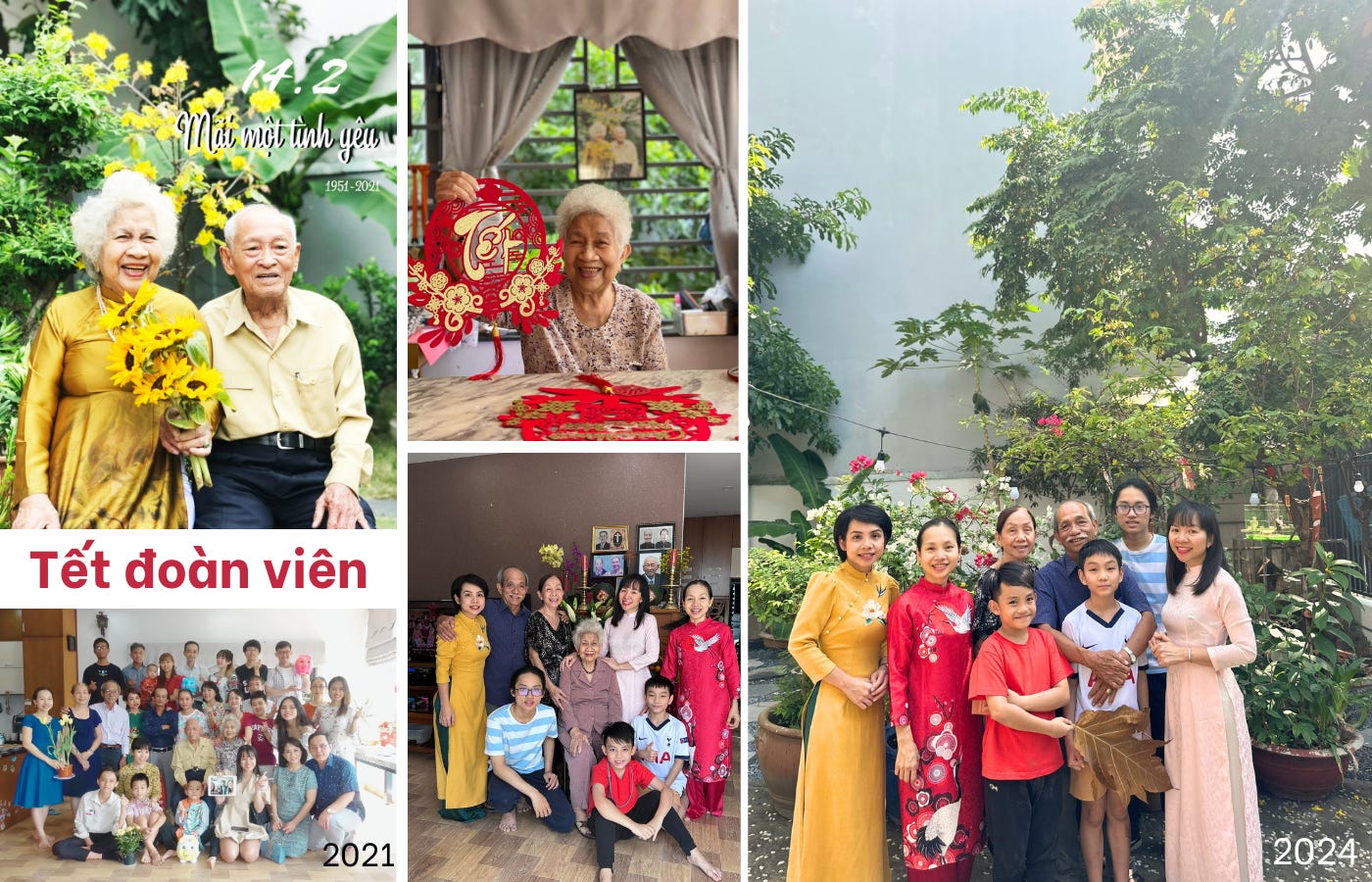
Photo: My family on Tết holiday. My paternal grandparents and parents have always preserved the tradition of a four-generation gathering at the beginning of the year to exchange New Year wishes and break the piggy bank to give 'lucky money' to the children and grandchildren.
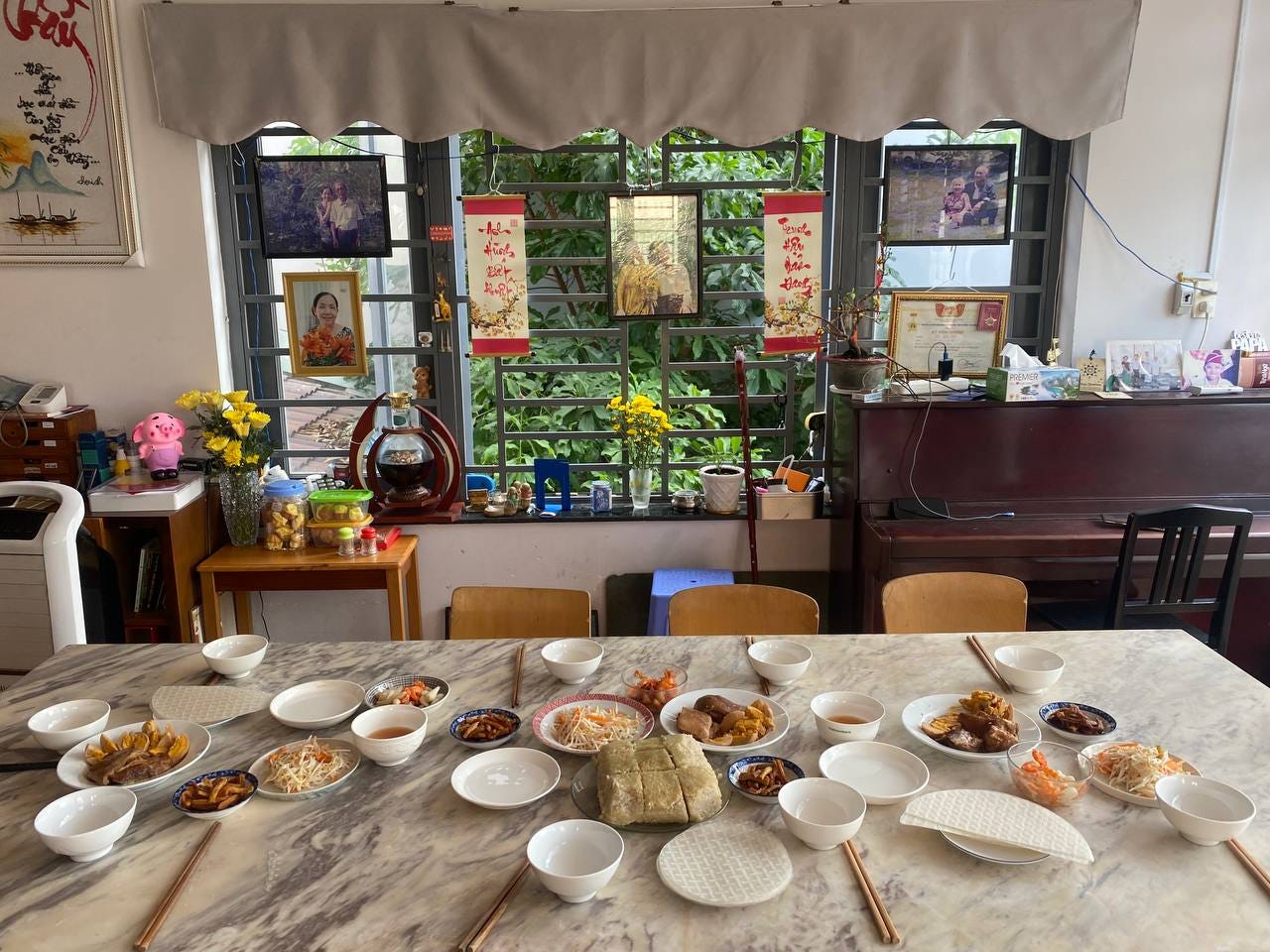
Photo: The traditional feast for New Year's Eve and the morning of the first day of Tết, meticulously prepared by our mother.
Video: The essence of Tết is the reunion of my family.
The following precious historical documents and ancient annals all record that the origins of Tết Nguyên Đán belong to the Vietnamese people (the ancient Bách Việt) from the very beginning, rather than being a mere "copy" from the North. These are the primary sources frequently utilized by cultural researchers to defend and preserve the authentic identity of the Vietnamese Tết:
1. The Classic of History (Shujing) by Confucius (孔子 - Khổng Tử)
This is one of the most powerful pieces of evidence proving the origin of Tet. In the Classic of History (a collection of ancient Chinese historical documents), Confucius recorded the festive customs of the Southern people (the lands of the Bach Viet).
Content: Confucius wrote: “I do not know what ‘Tet’ is. I have heard that it is the name of a grand festival celebrated by the ‘Man’ people (a term used by Northerners to refer to the ancient Southerners). They dance, drink, and revel during those days.”
Significance: This demonstrates that during the time of Confucius (6th-5th century BCE), the Chinese people of the North had no concept of “Tết” as it was practiced by the Vietnamese in the South.
2. The Giao Chi Records (Giao Chỉ Chí - 交趾志)
Giao Chi is the ancient name for the land of Vietnam. Within the Giao Chi Records (historical accounts of the Giao Chi region), northern feudal historians documented customs that were entirely distinct from those of the Central Plains (Trung Nguyen).
Content: The documents record that since ancient times, the people of the Giao Chi region had a custom of celebrating the conclusion of a rice harvest and the beginning of a new cultivation cycle.
Significance: This content confirms that Tet Nguyen Dan was originally an Agricultural Festival of wet-rice farmers. In contrast, the ancient northerners were primarily nomadic or focused on dry-land cereals such as millet and wheat.
3. Brief History of An Nam by Le Tac (An Nam Chí Lược 安南志略 - Lê Tắc)
Although Le Tac wrote this book while living in China (14th century), he clearly and meticulously recorded the customs of the Vietnamese people.
Content: He described the Vietnamese practice of wrapping Bánh chưng and Bánh giầy, along with ancestral worship rituals that had been firmly established since the era of the Hùng Kings.
Significance: The existence of Bánh chưng and Bánh giầy serves as the most critical material evidence. These two types of cakes are deeply intertwined with the “Round Sky and Square Earth” philosophy and the wet-rice agriculture of the Vietnamese. Notably, they are entirely absent from the early history of the Chinese people.
4. Calendrical Systems: The Distinction between "Nông" (Agrarian) and "Hoa" (Chinese) Calendars
Researchers point out that the ancient Bách Việt people possessed the knowledge to calculate the calendar based on the wet-rice cultivation cycle (a lunar system combined with 24 solar terms).
Argument: The Vietnamese Tet is intrinsically linked to Lập Xuân (The Beginning of Spring). While ancient Chinese dynasties (such as the Qin and Han) varied their New Year start dates—sometimes selecting the 10th, 11th, or 12th month—the Vietnamese consistently maintained the first day of the First Lunar Month (Tháng Giêng) as Tết. This marks the true awakening of spring and the commencement of a new planting season.
5. Archaeology and Folklore
The Legend of Bánh chưng and Bánh giầy: This story dates back to the era of the 6th Hung King. When cross-referenced with historical timelines, this period corresponds to prehistory - centuries before the Han Dynasty’s invasions and their subsequent policies of cultural assimilation.
Dong Son Bronze Drums: The intricate engravings on these ancient drums depict festivals, ritual dancing, and rice pounding. những hình ảnh này hoàn toàn trùng khớp (perfectly align) with the descriptions of the early New Year rituals practiced by the ancient Vietnamese people.
Comparison Table: Vietnamese Tết (Vietnamese Lunar New Year) and Chinese New Year (Chun Jie)
1. Origin
Vietnamese Tet (Tết Việt Nam): Originates from the wet-rice civilization. In the first lunar month, farmers rest and give thanks to Heaven and Earth for a bountiful harvest. They pray for favorable weather, reunite with family, and remember ancestors. It is a sacred moment connecting the past with the present and nurturing hope for the future.
Chinese New Year (Chun Jie): Ancient legend of the "Nian" monster. The beast would repeatedly attack humans at the start of the year. People discovered that the color red scared the monster away. Since then, red became the dominant color of Tet with red lanterns, red paper, and red clothes to protect families from evil spirits and bad luck, reflecting the wish for a peaceful and prosperous new year.
2. Duration and name
Traditional Vietnamese Tet or Lunar New Year (Tết Việt Nam) ) begins on the 23rd day of the 12th lunar month and lasts for 15 days.
Chinese New Year is called "Chunjie" (Spring Festival) and usually occurs at the beginning of the first lunar month, lasting for nearly 40 days.
3. Phylosophy
Vietnamese Tet (Tết Việt Nam): Toward roots, ancestors, and wet-rice agriculture.
Chinese New Year: Toward prosperity and warding off evil spirits (the legend of the Nian monster).
4. Symbols
Vietnamese Tet (Tết Việt Nam): Peach Blossoms (North) and Yellow Apricot (South) are the primary flowers.
Chinese New Year: Orchids, Narcissus, or Kumquat trees.
5. Cuisine
Vietnamese Tet (Tết Việt Nam): Banh Chung, Banh Tet (symbols of Earth, Sky, and the rice plant). Dishes like pickled vegetables (dua mon), braised pork with eggs in coconut water, and bitter melon soup are also indispensable, expressing the wish for a smooth and prosperous new year.
Chinese New Year: Dumplings (Jiaozi), Rice Cakes (Nian Gao), steamed buns, dried tangerine peel jam, boiled chicken, and roasted pork. These dishes are not only delicious but also carry meanings of luck and fortune.
6. Zodiac
Vietnamese Tet (Tết Việt Nam): The Year of the Cat (closely associated with farmers).
Chinese New Year: The Year of the Rabbit.
7. Traditional customs
Vietnamese Tet (Tết Việt Nam): Sending off the Kitchen Gods on the 23rd of the 12th lunar month, visiting and burning incense at ancestral graves, asking for calligraphy, and first footing (Xong Dat) to pray for luck. The customs of betel nut chewing and plucking lucky buds. These activities carry spiritual significance and show solidarity and gratitude to ancestors.
Chinese New Year: Lion and Dragon dances, lighting firecrackers to ward off evil spirits. Hanging red couplets on doors and pasting the character "Fu" (Happiness) upside down on doors to welcome blessings and pray for wealth.
For more reference (Hyperlink)
Exploring Vietnamese Culture Through Books About Tet - Tìm hiểu văn hoá Việt qua những cuốn sách về Tết
Tet Nguyen Dan and the Differences Between Vietnam and China – Vietnam Women’s Newspaper - Tết Nguyên Đán và sự khác nhau ở Việt Nam và Trung Quốc - Báo Phụ nữ Việt Nam
The origins of the Lunar New Year: Vietnam or China? The presentation in modern language is quite fascinating; however, one should be 'gentle' regarding the costume details that may not strictly align with Vietnamese historical records.